



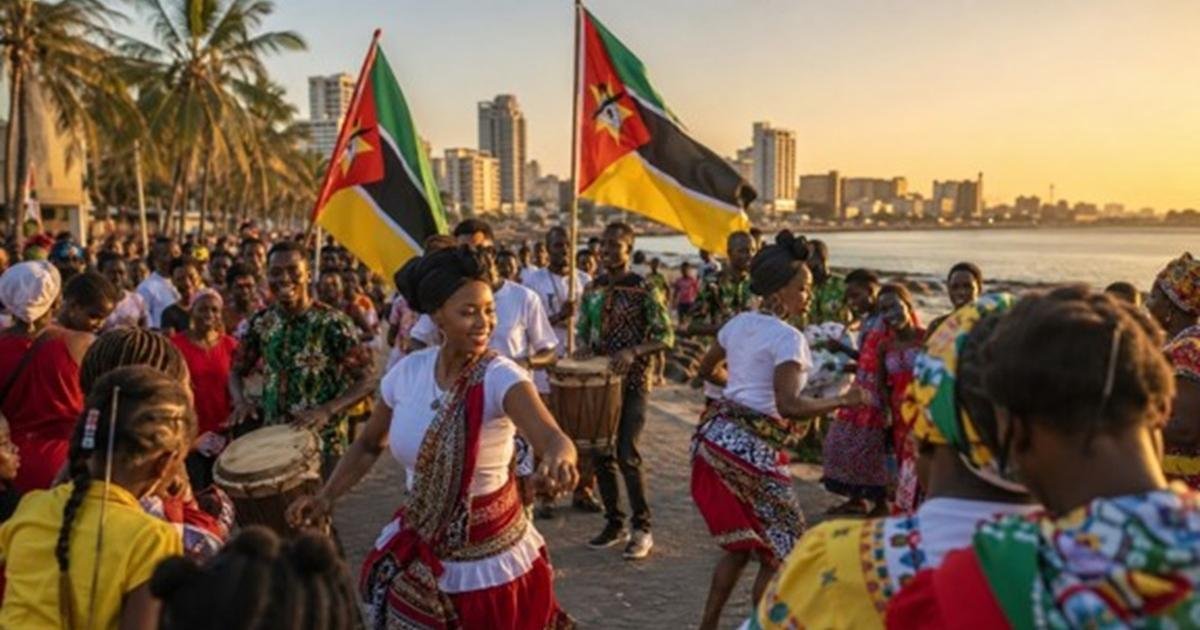
Mozambique marks Victory Day today, 7 September, remembering the Lusaka Accord signed in 1974 and the decisive step it created towards national independence. The agreement prepared the transfer of power that led to independence on 25 June 1975. More than five decades later, the date remains an important national holiday and a time to honour the people who worked for self-determination. Public ceremonies, cultural programmes and community gatherings place unity at the centre of the occasion.
Victory Day is celebrated as a bridge between sacrifice and the birth of a sovereign republic. Its meaning is not limited to a document or a single historical moment. It recalls the patience, organisation and shared purpose that made a new national future possible. For younger Mozambicans, the anniversary offers a clear invitation to learn history while taking responsibility for the country they are building today.
Located in southeastern Africa, Mozambique has one of the continent’s longest Indian Ocean coastlines. The sea shapes the country’s climate, food, trade and sense of place, from Maputo in the south to island and coastal communities farther north. Major ports at Maputo, Beira and Nacala connect inland neighbours with global markets. Fishing, shipping and tourism also support livelihoods along this broad ocean front.
The country’s natural character changes greatly from region to region. River valleys and fertile plains support farming, while highlands, forests, savannas, beaches and coral islands offer striking variety. The Zambezi is among the great rivers crossing the country, and the Cahora Bassa dam is an important source of power. Gorongosa National Park has gained international attention for conservation and the recovery of wildlife.
Mozambique’s people bring together many languages and cultural traditions. Portuguese is the official language, while Makhuwa, Sena, Tsonga, Lomwe and numerous other African languages are spoken in homes and communities. Music and dance are central to public celebration, and styles such as marrabenta carry an unmistakably Mozambican rhythm. Sculpture, woven crafts, bright capulana fabrics and oral storytelling keep local knowledge visible across generations.
The country’s food reflects both land and sea. Cassava, maize, rice, beans, coconut, vegetables, fish and prawns appear in dishes that vary by region. Spices and coastal trading links have added further flavours, while family recipes give meals their local identity. Hospitality around food brings warmth to national celebrations and offers visitors an immediate introduction to Mozambican life.
Agriculture continues to support many households, with farmers producing cassava, maize, sugar, cotton, cashews, fruit and other crops. Mozambique also has major resources in natural gas, minerals and hydropower. Transport corridors serving neighbouring states strengthen its role in southern African trade. Responsible investment, local skills and reliable infrastructure can help these advantages create wider opportunity.
A young population gives the country a strong source of energy and imagination. Access to quality schools, technical training, healthcare and employment remains essential for turning that potential into shared progress. Young Mozambicans are active in small enterprise, farming, music, digital work and community projects. Their ambition gives Victory Day a forward-looking character, because national achievement continues through what each generation chooses to contribute.
Islam has deep roots along the northern coast, where Indian Ocean trade connected communities with East Africa, Arabia and Asia over many centuries. Mozambique’s membership in the Organisation of Islamic Cooperation strengthens its ties with a wider family of nations. Cooperation in education, health, agriculture, trade and humanitarian work can support practical benefits for communities. The country’s presence also reflects the cultural breadth of the OIC itself.
Mozambicans are known internationally through sport, music, literature and art as well as through their work at home. Football fills public spaces with excitement, while athletes in several disciplines have carried the flag abroad. Writers and artists present the country’s memory in voices that are both local and outward-looking. These forms of expression help national pride remain creative and welcoming.
As Mozambique observes Victory Day today, it honours a turning point that opened the path to independence. The celebration remembers determined action, but its strongest present-day message is the value of unity, peace and useful work. From the Indian Ocean coast to farms, cities and inland communities, citizens share in a country of generous culture and substantial promise. The anniversary belongs to history, yet its hope rests firmly with the people shaping Mozambique’s next chapter.
- Business News 114
- Country News 16
- Feature News 66
- International News 237
- Interview News 36
- National News 36