



Researchers at Carnegie Mellon University in Qatar have identified a long non-coding RNA molecule that may support new approaches to some forms of breast cancer treatment. The team named the molecule PINC, short for PTEN Intronic Non-Coding RNA. Laboratory findings indicate that it can act independently as a tumour suppressor and reduce the growth of endocrine-responsive breast cancer cells.
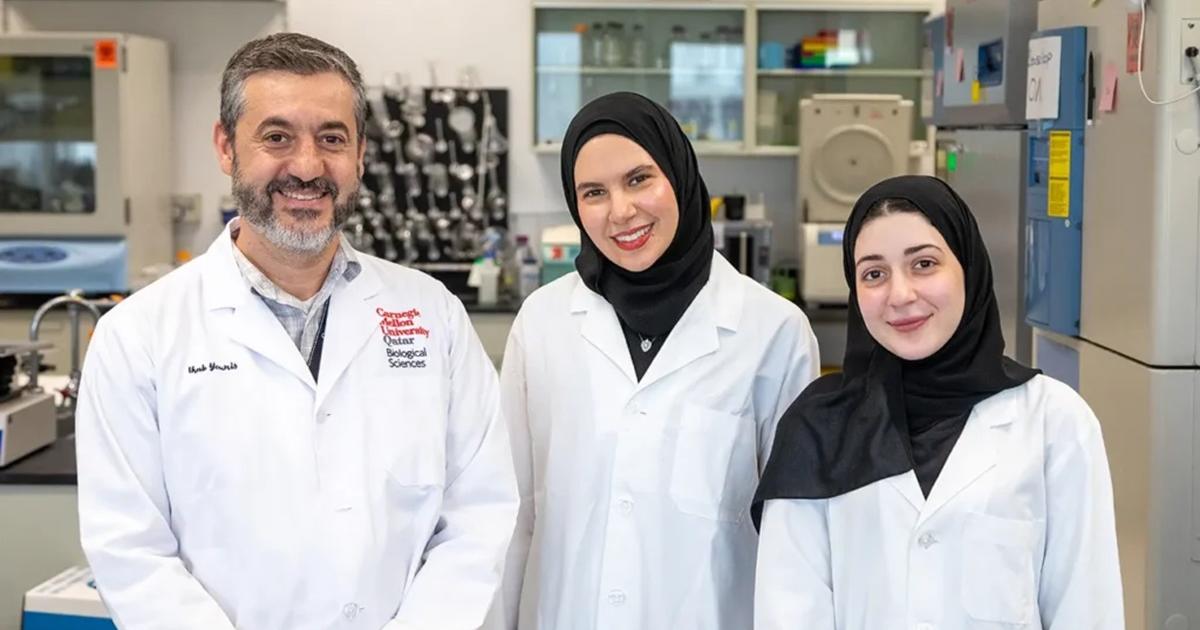
The multi-year study was led by Ihab Younis, teaching professor of biological sciences at CMU-Q. Co-authors include graduates Boshra Al-Sulaiti, Mariam Elesnawy, Hana Hasna and Aisha Fakhroo, who began working on the research as undergraduate students. Rim Elghandour also contributed as a research associate under Younis’s Qatar National Research Fund grant.
The project began with a computer-based comparison of minor introns in breast-cancer and non-breast-cancer cells. Minor introns account for only 0.4 percent of human introns and remain less understood than other parts of genetic code. While examining the well-known tumour-suppressor gene PTEN, the researchers found that preventing one intron from splicing normally produced the PINC molecule.
Although PTEN has been studied for decades, the team reported that this particular process had not previously been identified. The findings were published in iScience, a Cell Press journal. CMU-Q said the work also reflects its effort to involve undergraduate students directly in faculty-led scientific research.
Younis is now studying PINC levels in cells to assess possible therapeutic uses. The next stage will also examine three other target genes found during the original screening. The research remains at an investigative stage, but it gives scientists a new biological mechanism to test as they study how certain breast cancer cells grow and how that growth may be controlled.
- Business News 114
- Country News 16
- Feature News 65
- International News 235
- Interview News 36
- National News 35