



Thousands of miles from Bosnia and Herzegovina, a passionate community in the American Midwest is preparing to support the national team as it begins its second World Cup campaign. An estimated 60,000 to 70,000 Bosnians live in St. Louis, many of whom arrived during the 1990s after fleeing the Bosnian War and the breakup of Yugoslavia.
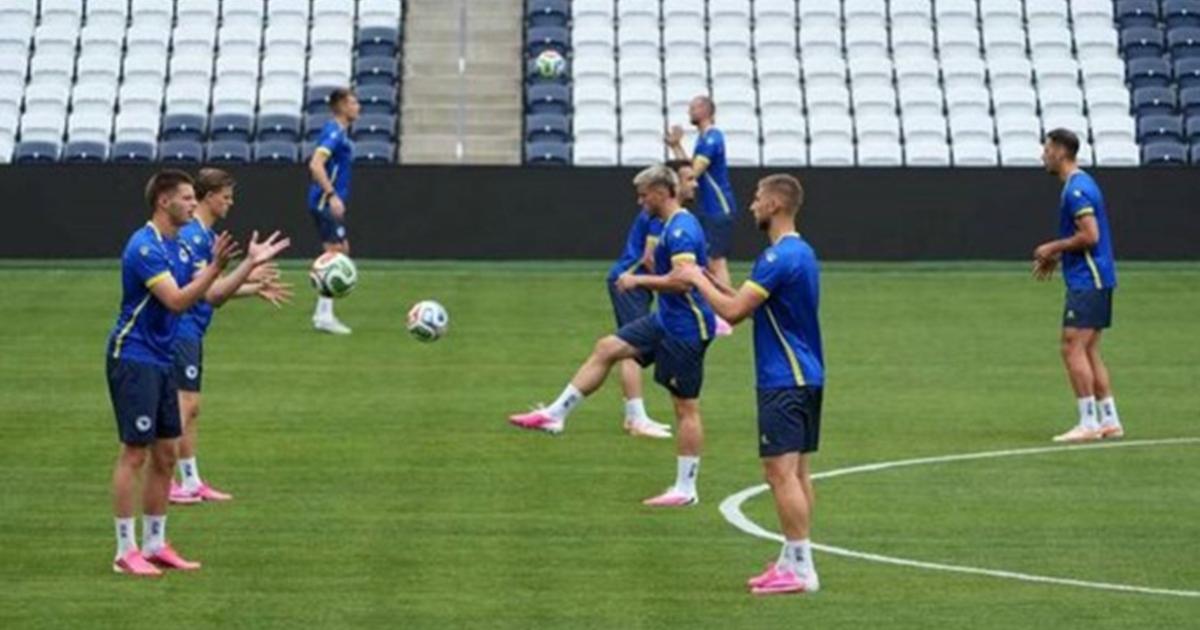
Bosnia will face Panama in an international friendly at Energizer Park in St. Louis on Saturday before starting its World Cup group-stage campaign. The team is scheduled to play Canada in Toronto, Switzerland in Los Angeles and Qatar in Seattle. Elvir Kafedžić, a Bosnia-born St. Louis resident and assistant coach of MLS club St. Louis City SC, believes the local support could make the atmosphere feel like a home game for the national side.
Kafedžić was just nine and a half years old when he left Bosnia with his mother and brothers in 1992 to escape the conflict. He said memories of the war remain vivid and recalled how his family moved through several countries, including Montenegro, the Czech Republic, Sweden and Germany, before eventually settling in St. Louis in 1999. The move came after Germany ended temporary protection for Bosnian refugees, while relatives already living in St. Louis helped the family establish a new life there.
Bosnia secured its place at the World Cup two months ago with a dramatic victory over four-time champion Italy. After a 1-1 draw, Bosnia won 4-1 in a penalty shootout, with the decisive kick converted by Bosnian-American Esmir Bajraktarević from Appleton, Wisconsin. Kafedžić said celebrations quickly spread across St. Louis, where Bosnian flags filled the streets and local restaurants and cafes were packed with supporters embracing one another.
The current squad is led by veteran captain Edin Džeko, 40, and 18-year-old winger Kerim Alajbegović. Džeko has scored more than 50 goals in each of the English Premier League, Italy’s Serie A and Germany’s Bundesliga. Bosnia’s only previous World Cup appearance came in Brazil in 2014, where the team narrowly missed advancing from the group stage. Its first World Cup goal was scored by Vedad Ibišević in a 2-1 defeat to Argentina.
Ibišević also shares a strong connection with St. Louis. He played high school soccer in the city, later starred at Saint Louis University and went on to enjoy a successful professional career, mainly in Germany’s top division.
St. Louis became a major destination for Bosnian refugees because of its job opportunities, affordable housing and an existing Bosnian community. Over time, a section of the city’s South Side became known as “Little Bosnia.” The neighborhood features Bosnian-owned cafes, bakeries and businesses, along with a replica of Sarajevo’s famous Sebilj fountain, which serves as a symbol of the community’s heritage.
The area also carries reminders of the tragedy that forced many residents to leave their homeland. Near the Skala Bar on Gravois Avenue stands the Association of Survivors of the Srebrenica Genocide. More than 8,000 Bosnian Muslims were killed in Srebrenica, an event recognized as genocide by the United Nations, the International Court of Justice and other international bodies. Overall, the war claimed an estimated 104,000 lives, displaced around 2 million people and saw Bosnian Muslims account for 83 percent of civilian deaths.
Bosnian culture remains deeply rooted throughout St. Louis. The city's MLS stadium serves Bosnian cuisine from the Balkan Treat Box restaurant, while Saint Louis University hosts the Center for Bosnian Studies. Several books have documented the community’s experiences, including Bosnian St. Louis: Between Two Worlds by Patrick McCarthy and Akif Cogo, which explores both the hardships and determination of Bosnian immigrants.
Before the war, Bosnia was a multi-ethnic and multi-religious society with Muslim, Croatian Roman Catholic and Serbian Orthodox communities living together. Many supporters see the national football team as a reflection of that shared identity. Jasmina Silić, speaking at the Skala Bar, said many Bosnians in St. Louis return to their homeland each year to visit relatives and maintain family ties. She added that the national team represents unity because players from different religious backgrounds come together as one, reflecting the spirit many remember from the former Yugoslavia.
- Business News 114
- Country News 16
- Feature News 65
- International News 235
- Interview News 36
- National News 35