



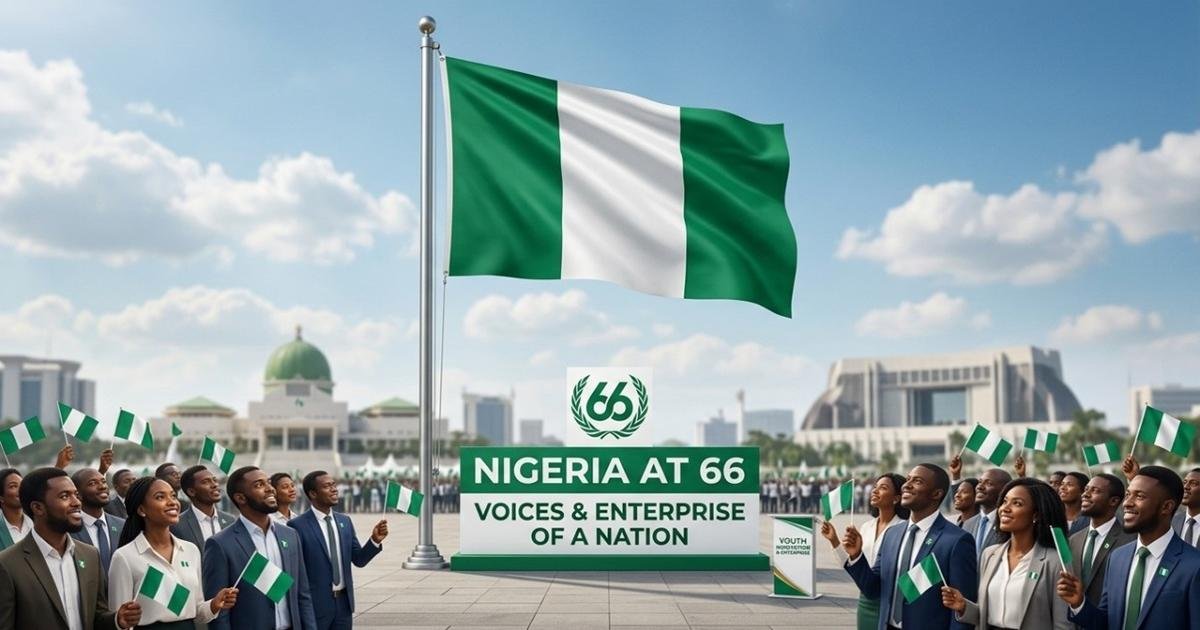
Nigeria celebrates its 66th Independence Day today, 1 October, honouring the sovereignty achieved in 1960 and the people who give the country its distinctive energy. The anniversary recalls independence from Britain, followed three years later by the establishment of a republic. It is a day for national pride, reflection and warm greetings among citizens at home and abroad. Behind the green and white flag stands a country whose influence reaches far through music, literature, business, sport and everyday human connections.
The meaning of independence is found in the lives of Nigerians as well as in the historical record. Families pass memories to younger generations, while schools and community organisations help children understand the national anniversary. Songs, shared meals and messages of goodwill make the occasion personal.
Nigeria is Africa’s most populous country, with a society that speaks hundreds of languages and expresses national belonging in many ways. Hausa, Yoruba and Igbo are among its major languages, while English is the official language and Nigerian Pidgin connects people across numerous communities. Regional traditions enrich dress, music, festivals and family life. The variety is one of Nigeria’s strongest introductions to the world, offering many voices within a common national home.
The country extends from the Atlantic coast and mangrove areas in the south to central plateaus and northern savannas. The Niger and Benue rivers meet at Lokoja, linking waterways that have long supported farming, fishing and travel. Abuja, the capital, is the centre of federal administration, while Lagos is a major commercial and creative city. Kano’s trading history, Ibadan’s educational institutions and the enterprise of southeastern cities reveal other important parts of national life.
Nigeria’s cultural achievements are familiar far beyond its borders. Writers such as Wole Soyinka and Chinua Achebe have brought Nigerian experiences to international readers, while filmmakers have built Nollywood into a widely recognised industry. Afrobeat and Afrobeats, distinct forms with different histories, both contribute to the country’s musical reach. Fashion, photography and contemporary art also give young Nigerians ways to present their ideas and earn a living from creative work.
Older traditions remain close to that modern creativity. The Osun-Osogbo Sacred Grove preserves a valued part of Yoruba heritage, while Sukur in northeastern Nigeria reflects a history of terraced farming, settlement and local industry. Both are UNESCO World Heritage Sites. In homes and markets, patterned fabrics, beadwork, pottery and carved objects continue to express regional knowledge. Preserving these skills allows national culture to grow without losing its connection with the people who sustain it.
Food offers another generous welcome. Jollof rice, suya, moi moi, pounded yam and soups made with local vegetables or seeds represent only a small selection of Nigerian cooking. Recipes change between regions and households, giving familiar dishes their own family character. Preparing and sharing food supports livelihoods as well as friendship. On Independence Day, the table is an easy place to appreciate how different traditions contribute to a shared celebration.
The economy combines agriculture, oil and gas, manufacturing, trade and a wide range of services. Farmers produce cassava, yams, rice, maize and other crops that feed communities and support markets. Technology businesses, financial services and local enterprises add further opportunities, especially in cities with strong commercial networks. Reliable electricity, transport and useful training can help more Nigerians turn their ability into successful work. The country’s greatest economic promise remains the initiative of its people.
Young Nigerians carry that initiative into classrooms, studios, laboratories and small businesses. Their ambition makes education and practical skills especially valuable, including opportunities for women to develop businesses and professional careers. Football and other sports bring communities together and give talented athletes a national stage. Nigerians abroad also maintain close links through family support, professional exchange and investment. These connections extend the country’s sense of community across continents.
Nigeria joined the Organisation of Islamic Cooperation in 1986 and contributes its West African experience to a diverse international membership. Islamic scholarship and community traditions have longstanding roots, particularly in the north, alongside the country’s wider religious variety. Cooperation in education, health, agriculture, trade and science offers useful ways to strengthen ties. Such partnerships work best when they help students, producers and families access knowledge and opportunity.
At 66, Nigeria celebrates independence through the achievements and possibilities of a remarkably enterprising population. Its anniversary honours those who helped secure sovereignty and those whose daily work continues to give it meaning. From a family kitchen to a film set, a farm or a technology workshop, citizens contribute in ways that deserve recognition. Today’s celebration welcomes every Nigerian voice into a national story that continues to grow through learning, cooperation and service.
- Business News 115
- Country News 16
- Feature News 66
- International News 239
- Interview News 36
- National News 37